
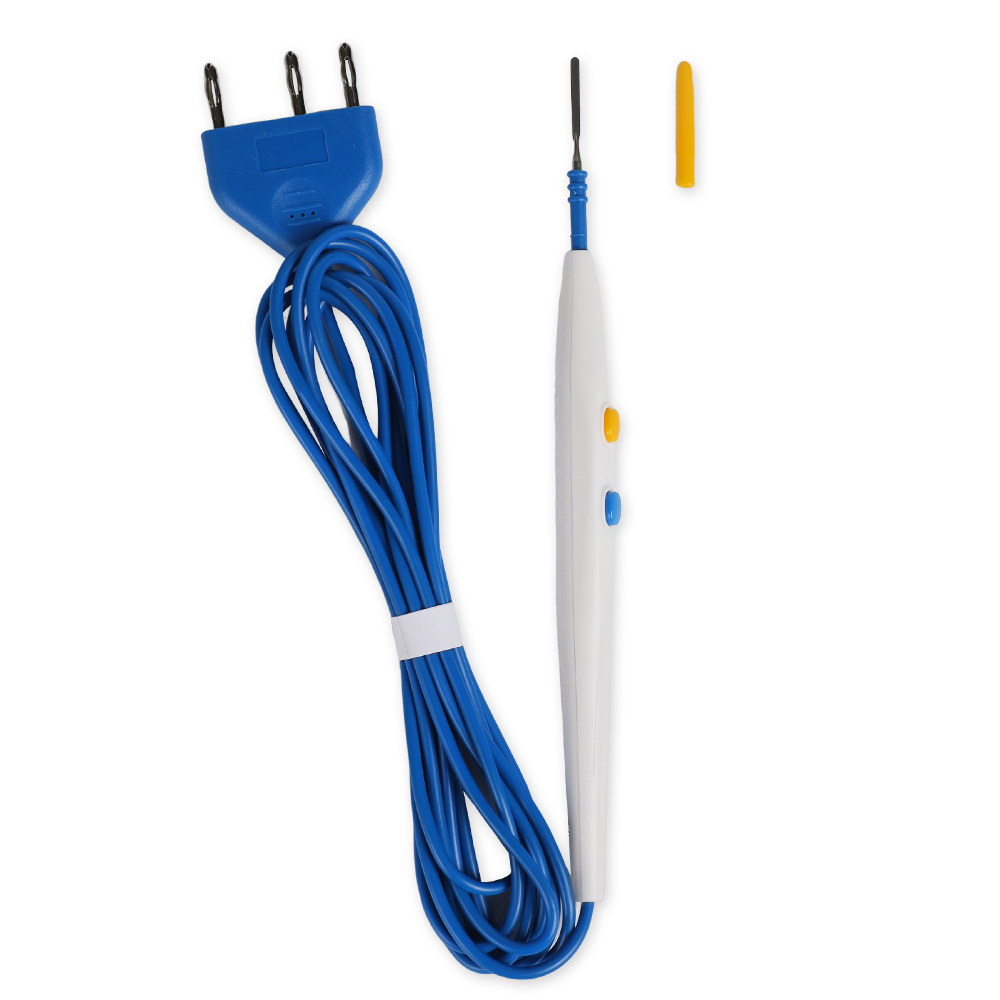
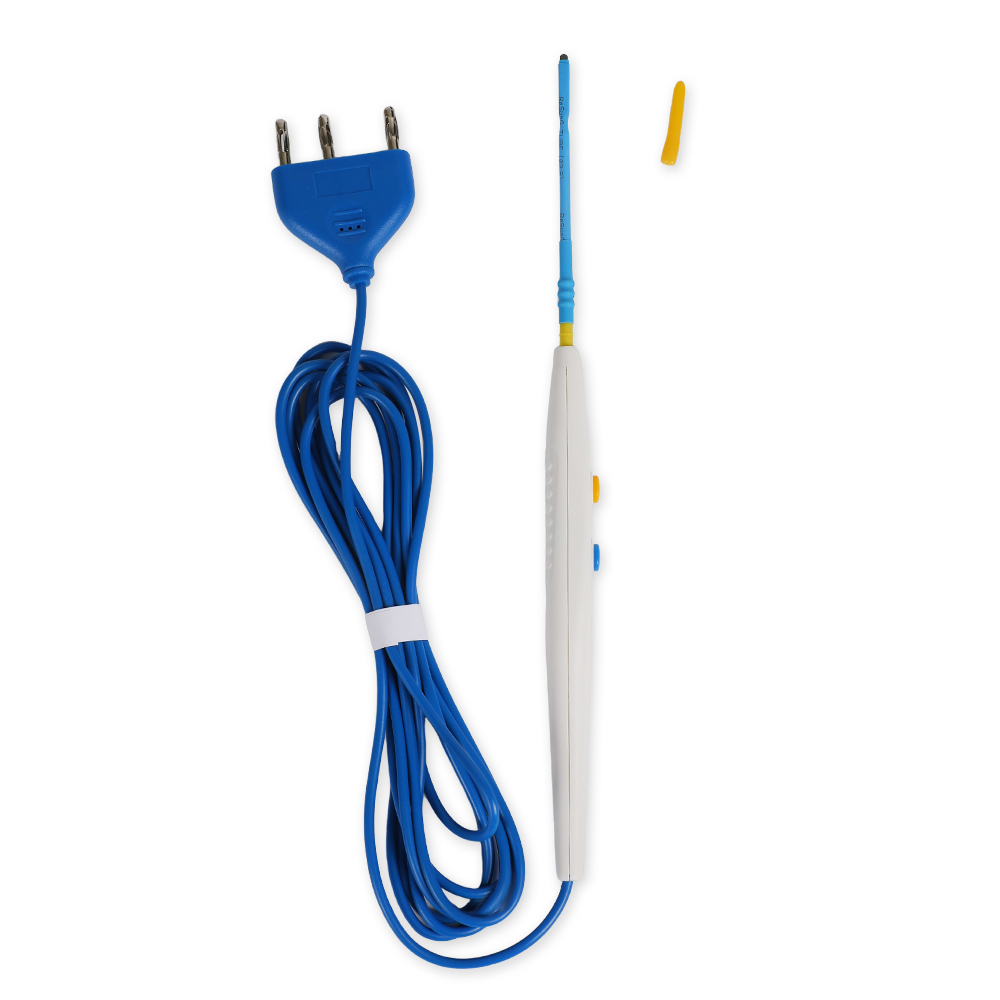
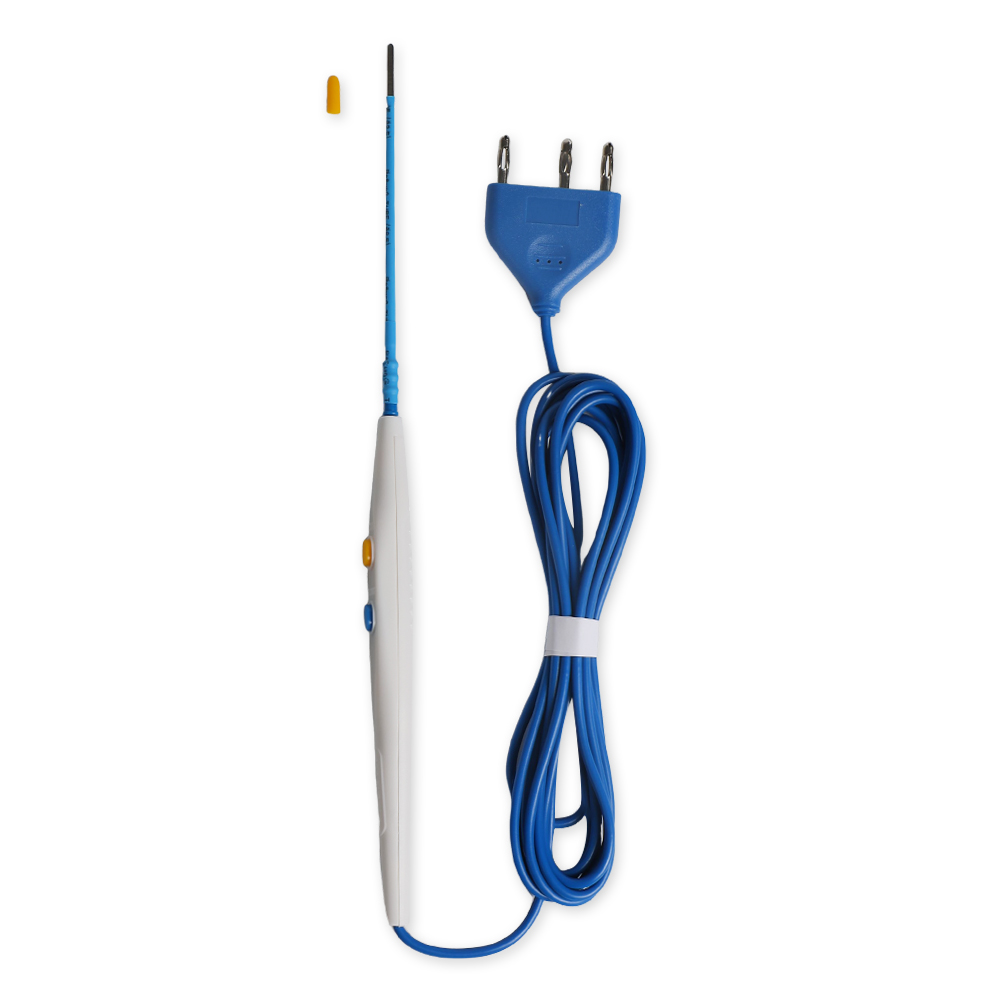
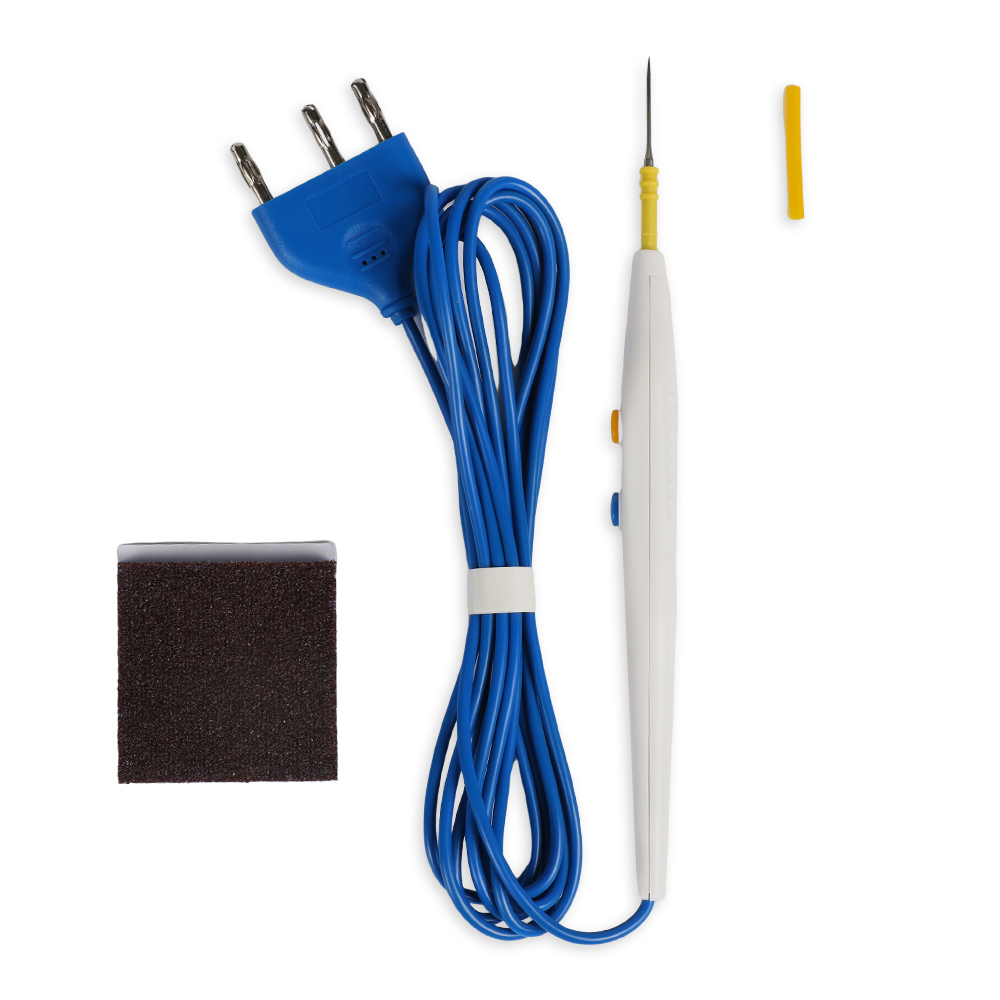
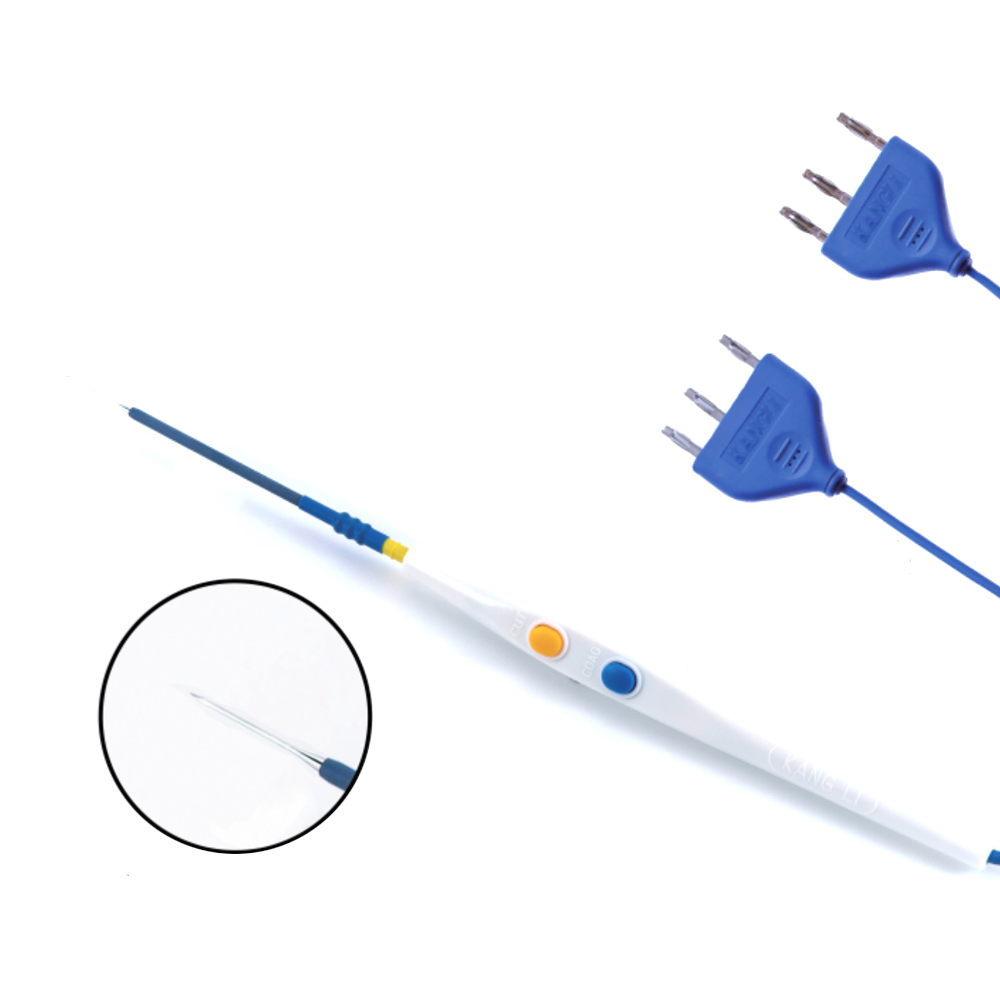
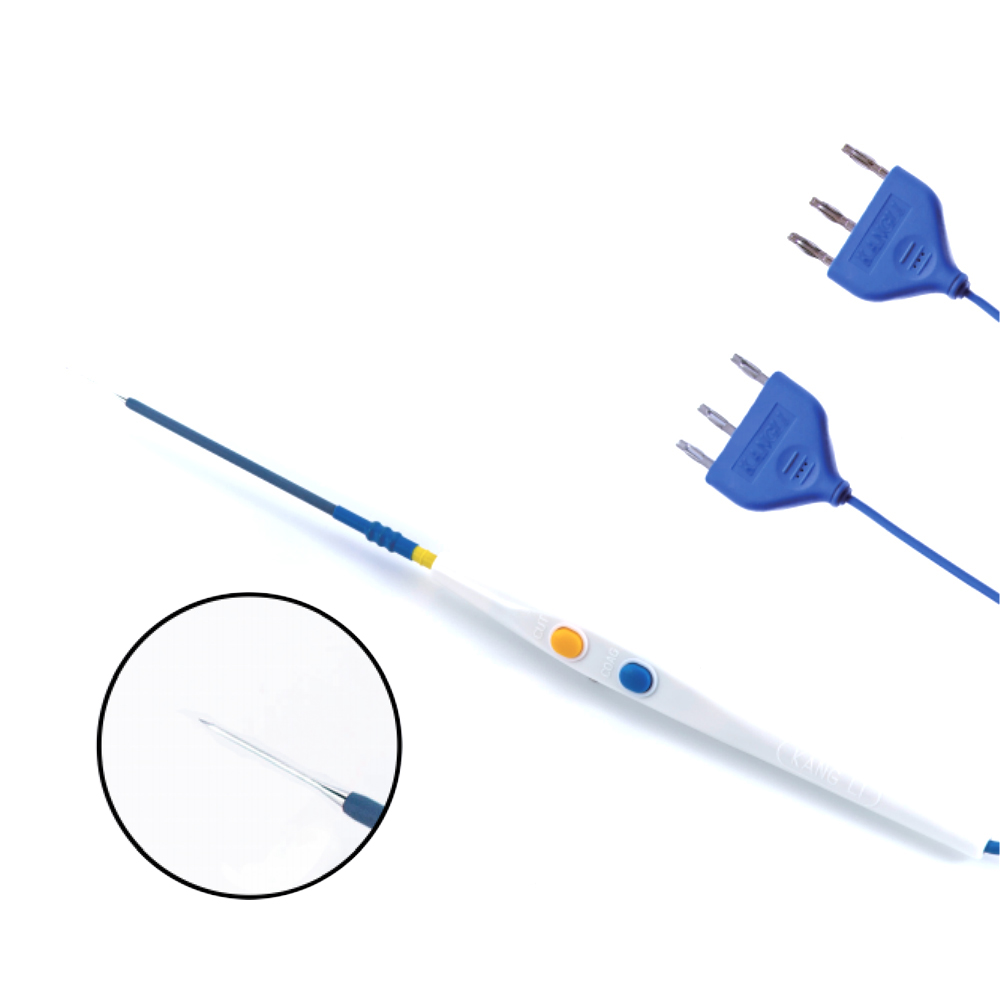
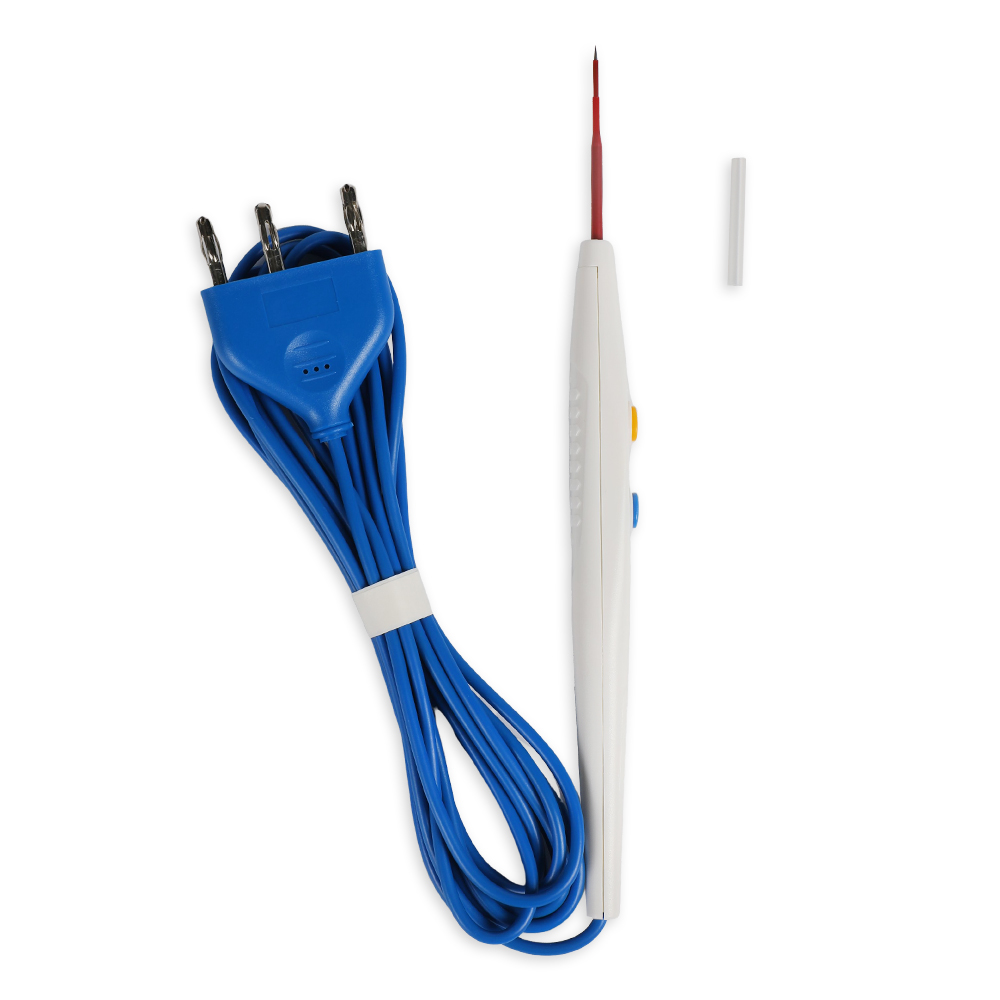
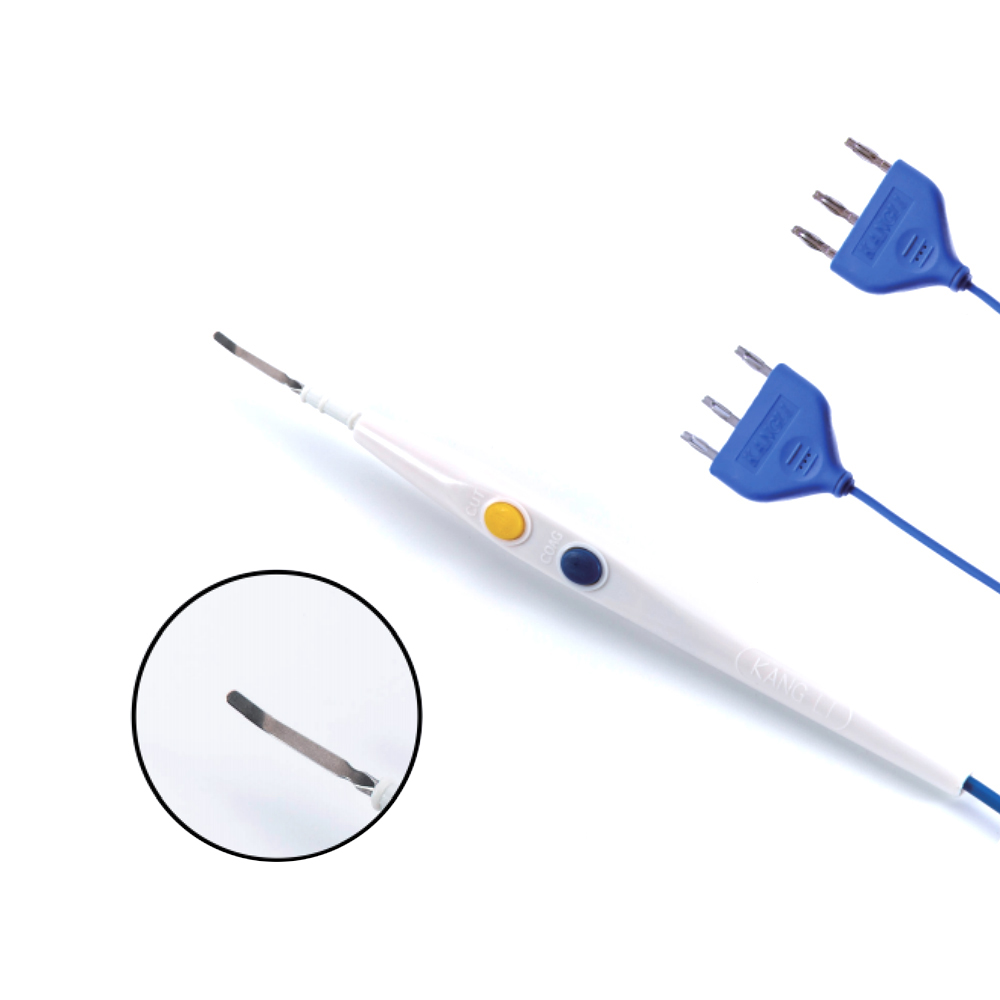
Retractable tip surgical electrodes are hand-held instruments used in electrosurgery to cut tissue and coagulate blood vessels. The electrode tip, made of stainless steel or tungsten, extends from the handpiece when a button is pressed or a slider is moved. When retracted, the tip hides inside an insulating ceramic or plastic sleeve, reducing the risk of accidental burns to non-target tissue. The tip is connected to an electrosurgical generator that delivers high-frequency alternating current (300 kHz to 5 MHz).
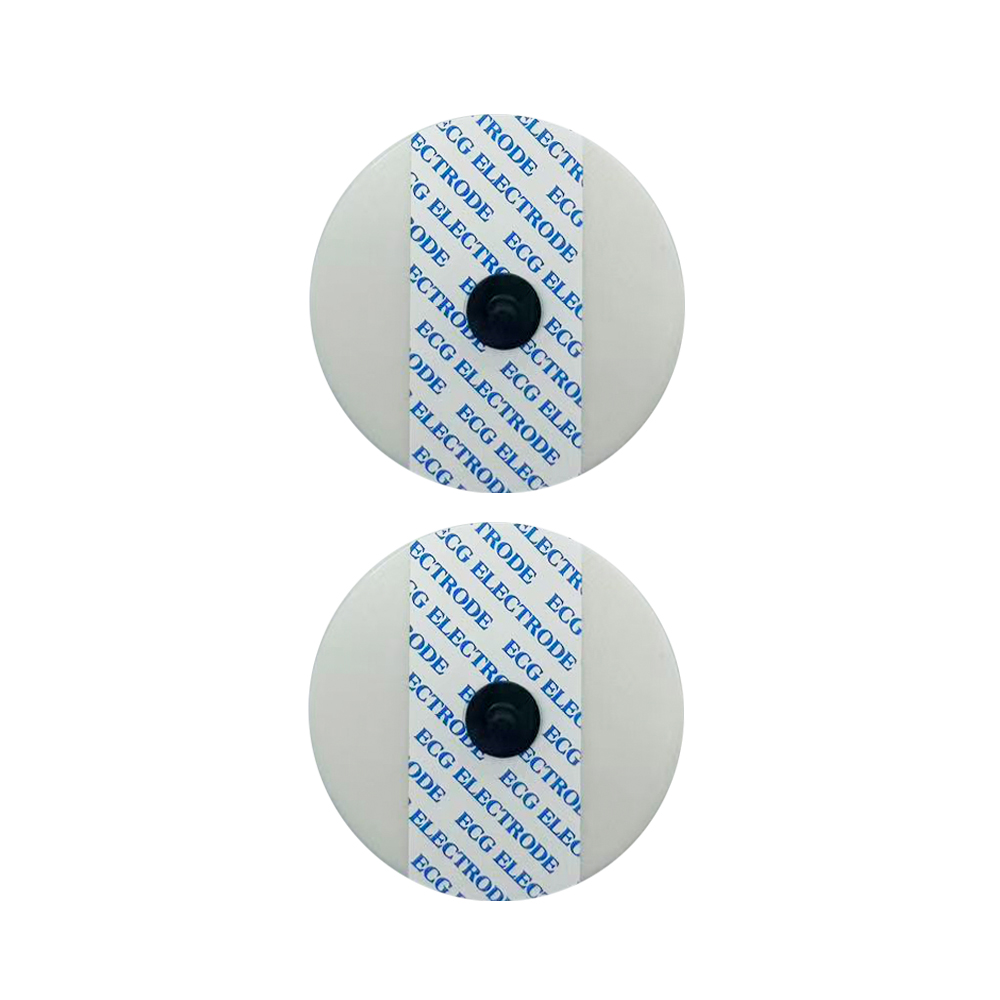
The current passes from the electrode tip through the patient's tissue to a return pad (dispersive electrode) placed elsewhere on the body. At the tip, the current density is high enough to vaporize intracellular water, causing cells to explode. This creates a precise incision with minimal bleeding. The retractable feature allows the surgeon to extend the tip only when actively cutting, then retract it during dissection or when moving the instrument near sensitive structures such as nerves or bowel.
Common Tip Shapes and Their Uses
The most common tip for general surgery is the blade tip, which is flat and pointed like a scalpel blade. Blade tips come in sizes from 15 mm to 30 mm long and 2 mm to 6 mm wide. The needle tip is fine (0.5-1.0 mm diameter) and pointed, used for precise coagulation of small bleeders and for cutting in confined spaces such as the tonsillar fossa or the prostate. The ball tip has a rounded end (1.5-3.0 mm diameter) and is used only for coagulation, not cutting. The ball delivers current over a larger surface area, heating tissue more slowly and causing it to shrink and seal rather than vaporize. The loop tip is a wire loop (5-15 mm wide) used for removing polyps in the colon or bladder; the loop is extended around the polyp, then retracted to tighten and cut with current. The L-hook tip, shaped like the letter "L," is used for dissection in laparoscopic surgery, where the surgeon hooks the tip under tissue and lifts it away from underlying structures before cutting.
Retraction Mechanisms and Safety Features
Two retraction mechanisms are common. The spring-loaded mechanism extends the tip when the user presses a button; releasing the button causes the tip to retract automatically. This is the safer design because the tip retracts immediately if the surgeon's finger slips. However, the spring force (2-5 N) can cause hand fatigue during long procedures. The slide mechanism requires the user to push a slider forward to extend the tip and pull it back to retract. The tip stays extended until manually retracted. This is preferred for procedures requiring repeated cuts in the same area (e.g., shaving a tumor off a nerve), but it relies on the surgeon remembering to retract. Most modern retractable electrodes have an audible click (65-75 dB) when the tip fully extends or retracts, confirming position without visual confirmation. The insulation sleeve must withstand 1,000-2,000 V without breaking down. Common insulation materials are PTFE (polytetrafluoroethylene, which resists sticking) and ceramic (alumina or zirconia, which is harder but more brittle). Ceramic-tipped electrodes last 20-30 procedures before the tip wears, compared to 10-15 for PTFE.
Cleaning and Reuse Limitations
Retractable tip electrodes are classified as reusable or single-use. Reusable electrodes have a stainless steel shaft and PTFE or ceramic insulation. They can be cleaned in an ultrasonic cleaner with enzymatic detergent (pH 7-9, 40-50°C, 5-10 minutes) and sterilized in an autoclave (134°C, 5-10 minutes, prevacuum cycle). The manufacturer specifies a maximum number of autoclave cycles (typically 20-50). After that, the insulation may crack or the retraction mechanism may fail. Single-use electrodes have plastic handpieces and are supplied sterile in peel-open pouches. They are intended for one procedure only. Attempting to clean and reuse a single-use electrode is not recommended because the plastic may not withstand autoclave temperatures (it deforms above 80°C). The cost difference is significant: a reusable electrode costs 200−200−500 and requires cleaning and sterilization after each use; a single-use electrode costs 15−15−40 and is disposed of after each use.
Lishui Kangli
Medical Devices
+86 153 0688 8169
2nd Floor, Building 1, 769 Kaiyuan Road, Bihu Town, Liandu District, Lishui City, Zhejiang Province, China
Contact Us
 English
 русский
 Français
 Español
 Deutsch
 عربى
عربى

