
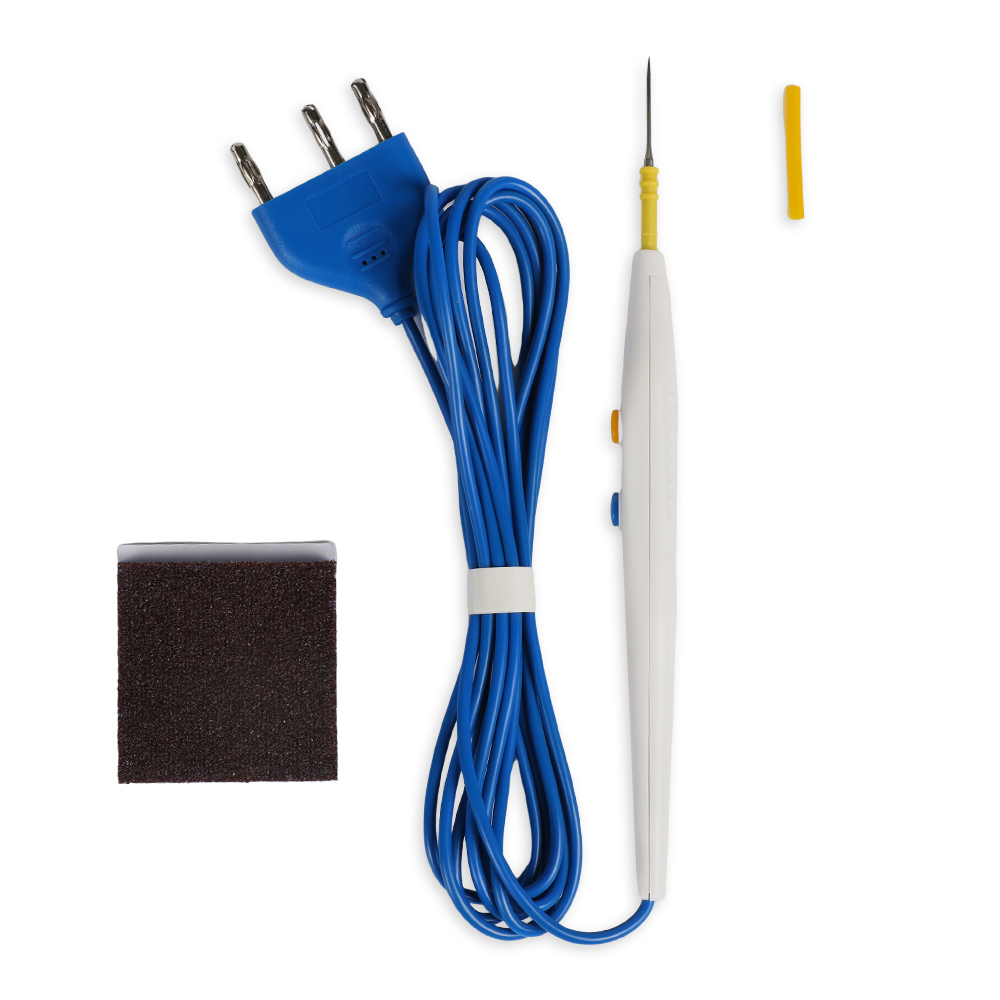
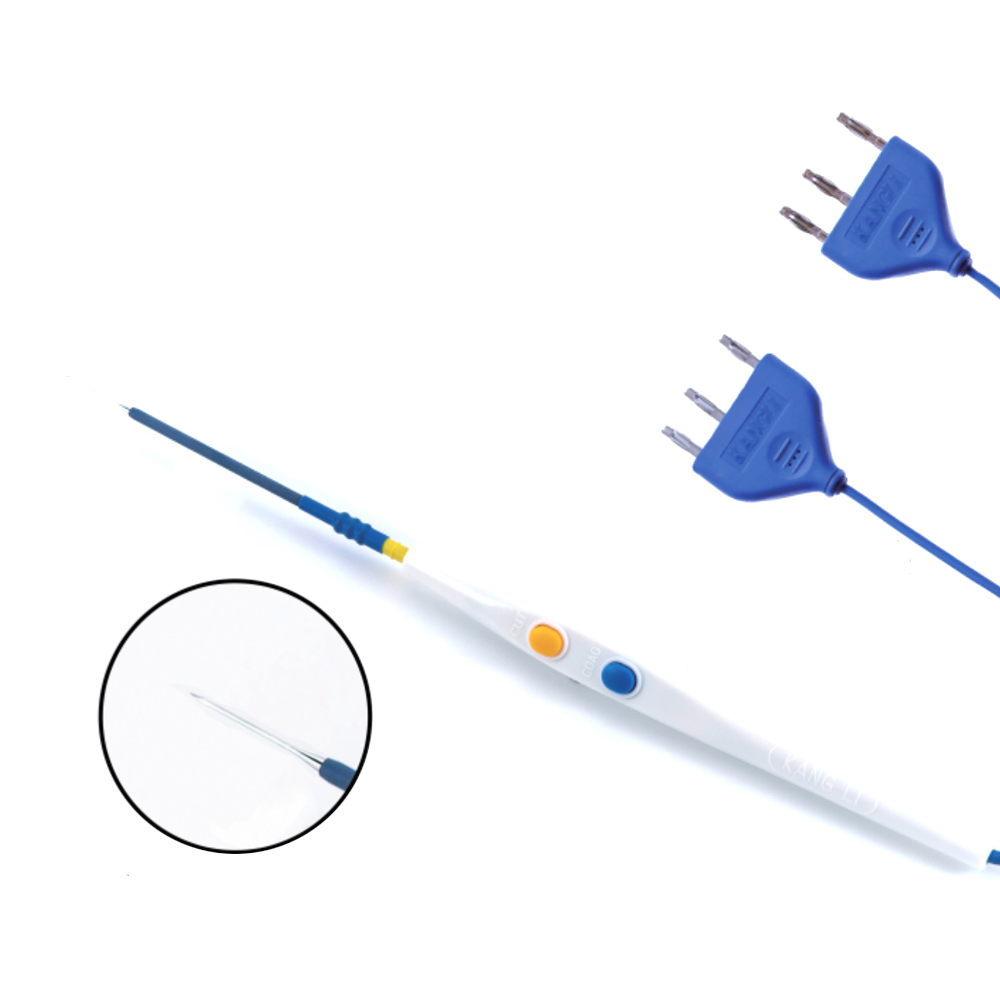
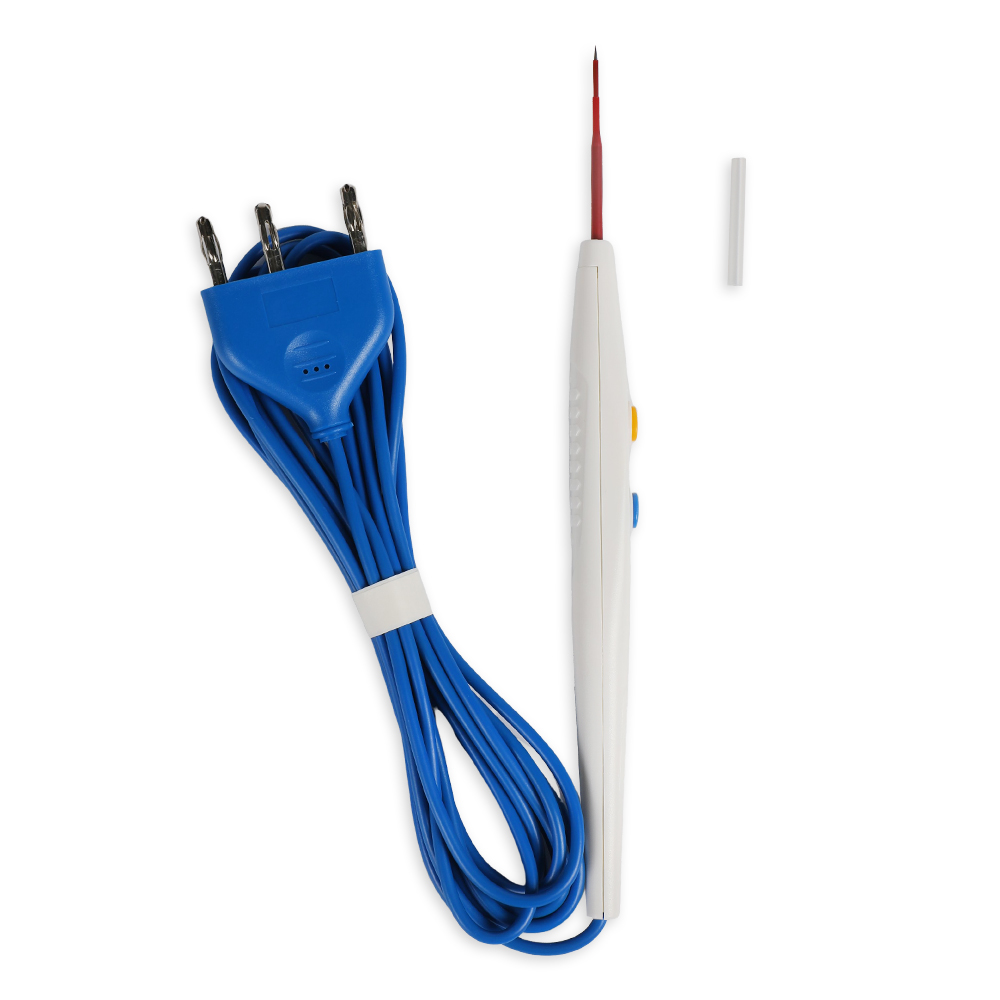
A foot-switch-controlled disposable electrosurgical electrode is a single-use surgical tool that connects to an electrosurgical generator. The surgeon activates cutting or coagulation by pressing a foot pedal, rather than using buttons on the electrode handle. This design keeps the surgeon's hand free to manipulate the electrode without repositioning fingers to press a button. Foot-switch systems are common in long procedures (orthopedic surgery, spinal surgery, thoracic surgery) where finger fatigue from holding a button is a concern. The following types are distinguished by tip geometry, shaft length, and intended surgical application.
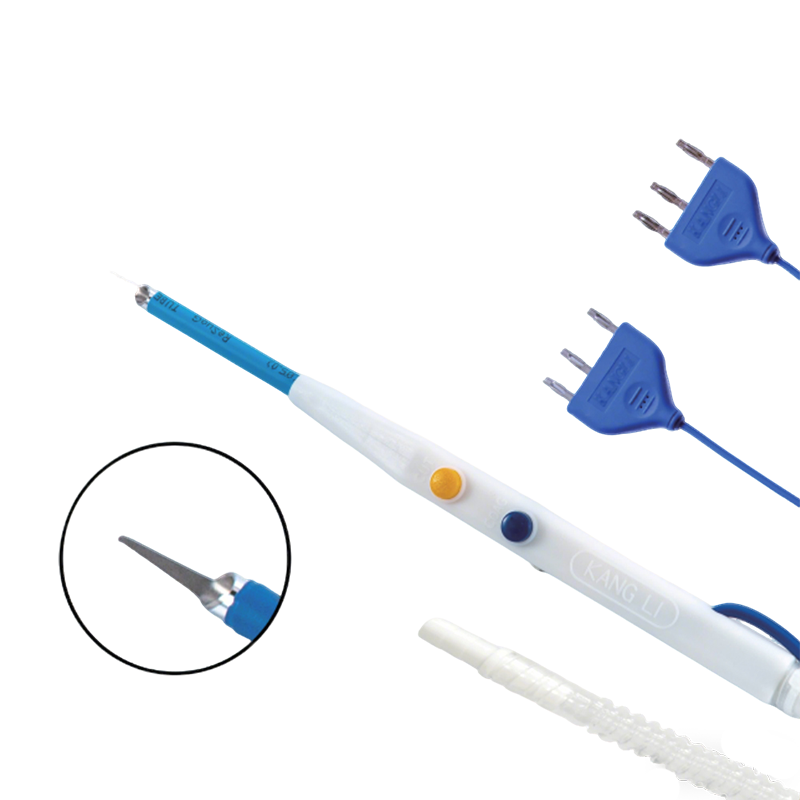
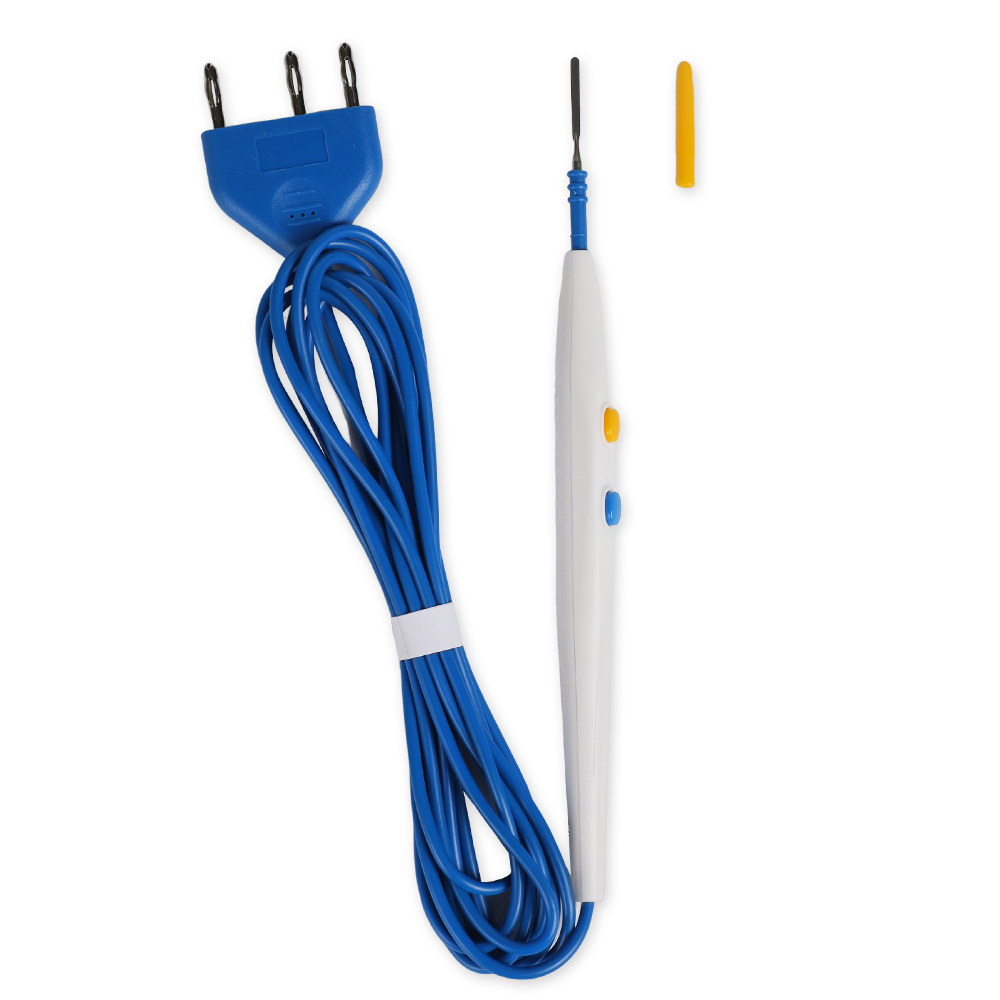
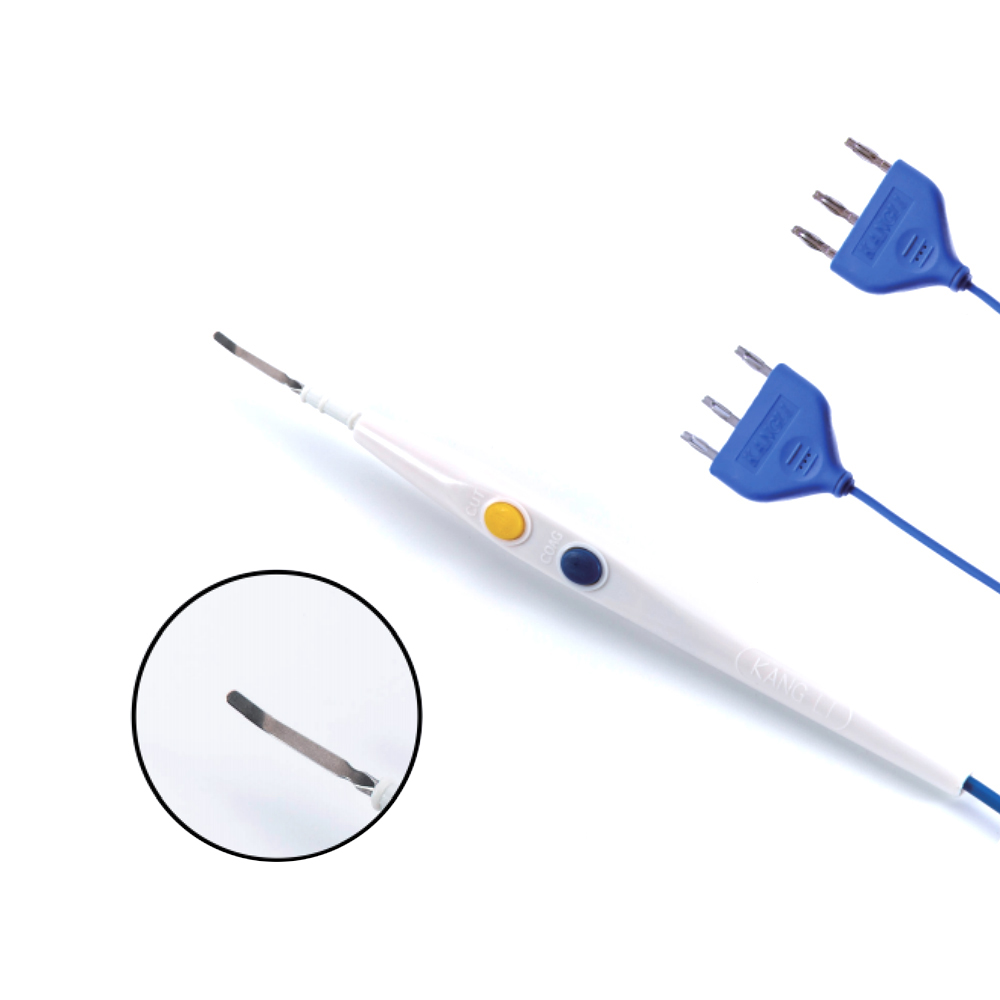
Standard blade tip (3–5 mm width, flat spear shape). The most common foot-switch electrode. The blade is made from stainless steel (AISI 420 or 430) or tungsten. The shaft is insulated (PTFE or polyolefin heat-shrink tubing) except for the exposed tip (10–15 mm). Used for general dissection, cutting fascia, and coagulating small vessels. Foot-switch activation allows the surgeon to keep the blade in a constant "ready" position and activate only when needed. Available with a "rocking foot pedal" (cut on one side, coated on the other).
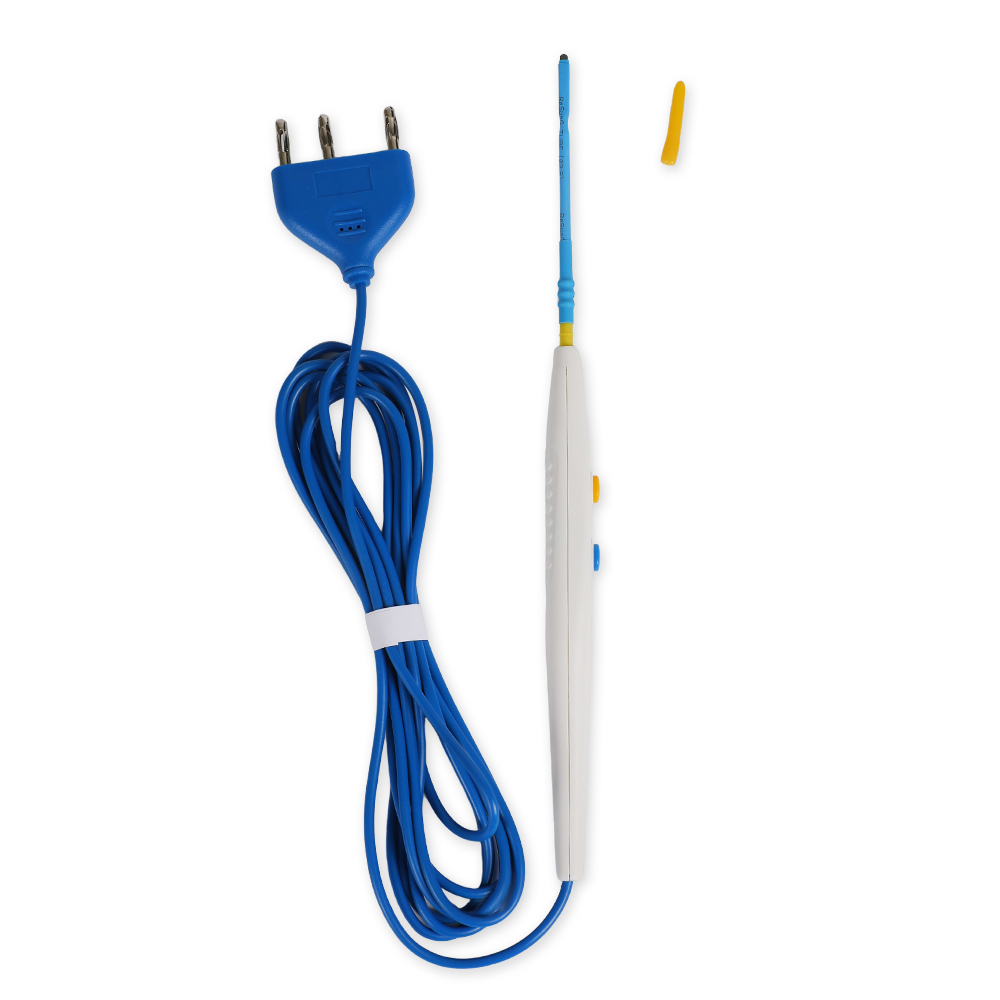
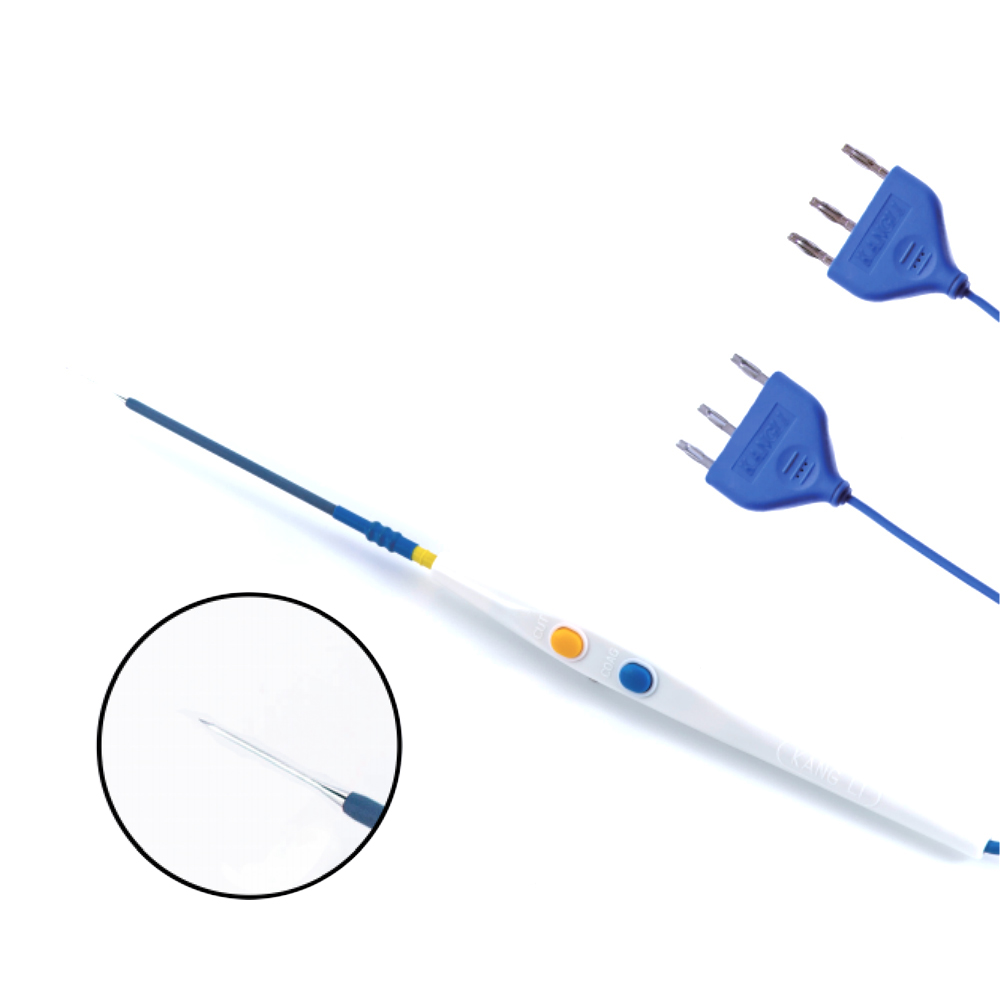
Needle tip electrode (pointed, 0.3–0.8 mm diameter wire). Used for fine, precise cutting in plastic surgery, hand surgery, and neurosurgery. The wire is tungsten (stronger than stainless steel) because of its thin diameter (0.3 mm), which bends easily. The needle tip is often longer (20–30 mm exposed length) than blade tips, to reach into deep narrow spaces. Foot-switch control reduces hand tremor when activating the current (pressing a button on the handle can cause small movement). For microsurgery, a "fine needle" (0.2 mm) is available.
Ball tip electrode (ball diameter 1.5–3.0 mm). For coagulation of oozing surfaces (liver, spleen, muscle beds). The ball is stainless steel or tungsten. A foot-switch ball tip is often used in "spray coag" mode (high voltage, non-contact). The ball is held 1–2 mm above the tissue; the surgeon activates with the foot pedal. Some ball electrodes have a "rolling" ball (spherical) or a "flat" ball (oblate). Coagulation depth is 1–3 mm; larger balls (3 mm) cover more area but require higher power (50–80 watts).
Loop electrode (loop width 5–15 mm, wire thickness 0.2–0.3 mm). Used in gynecology (LEEP – Loop Electrosurgical Excision Procedure) for removing cervical lesions. The loop is made of tungsten or stainless steel wire shaped into a semicircle, square, or triangle. Foot-switch activation allows the surgeon to position the loop precisely around the lesion, then activate and pull the loop through the tissue. The foot pedal is often a "dual" type: press halfway for cutting, press fully for coagulation after the cut.
Tip Material – Stainless Steel vs. Tungsten. The active tip (the part that contacts tissue) is either stainless steel or tungsten. Stainless steel (AISI 420 or 430) contains 12–14% chromium, which provides hardness (500–600 HV) and corrosion resistance. Stainless steel tips are less expensive and are used for blade, ball, and loop electrodes where the tip diameter is above 0.5 mm. However, stainless steel oxidizes at high temperature (above 400°C) during coagulation, forming a black oxide layer (char). This char must be wiped off. Tungsten (99.95% purity, 350–400 HV) is harder and has a higher melting point (3,422°C vs. 1,400–1,530°C for steel). A tungsten tip maintains sharpness longer and does not oxidize as readily. Tungsten is used for very thin needle tips (0.2–0.4 mm) because the metal resists bending. The disadvantage: tungsten is more expensive (3–5 times the cost of stainless steel) and more brittle; dropping a tungsten needle electrode can snap the tip.
Shaft and Insulation Materials. The shaft (the long part from the handle to the tip) is made of stainless steel tubing (hypodermic needle stock, 1.0–2.5 mm outer diameter). The tubing is seamless to prevent current leakage through a welded seam. The insulation covering the shaft is typically heat-shrink polyolefin (single or double layer, 0.2–0.5 mm thick) or PTFE tubing (0.1–0.2 mm wall). Polyolefin is less expensive and easier to apply but has a lower continuous temperature rating (105–125°C vs. 250°C for PTFE). For extended tips used in TURP (where the electrode is activated for 10–30 seconds continuously), PTFE insulation is required because polyolefin would soften and flow. The insulation must have a dielectric strength exceeding 5,000 volts per mm (to withstand the high voltage of coagulation modes, up to 3,000–6,000 V peak-to-peak). A pinhole in the insulation (0.1 mm) reduces dielectric strength locally; at 2,000 V, a spark will jump through the pinhole, burning the surrounding tissue.
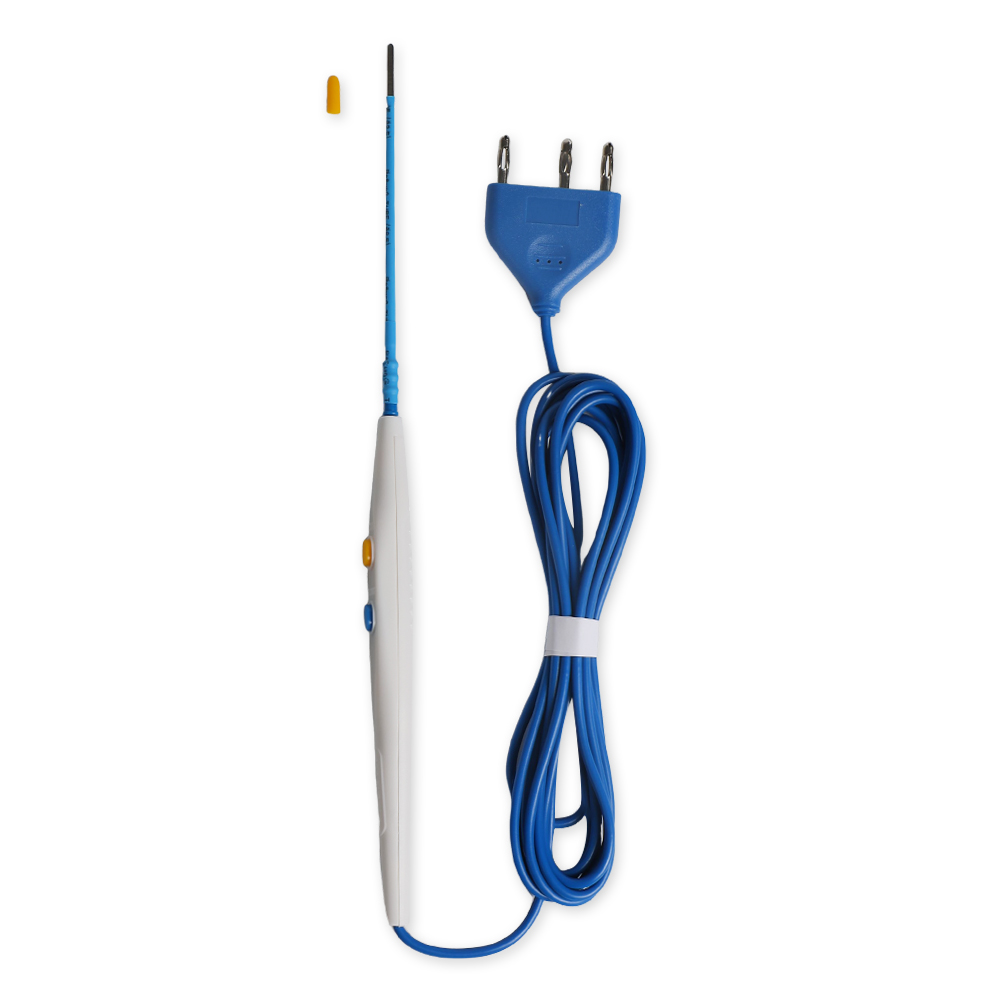
Handle and Cable Components. The handle is molded from medical-grade ABS plastic (high-impact, heat-resistant to 100°C). The handle contains a cavity for the foot-switch activation mechanism (no buttons on the handle – just a connector). A three-conductor cable (cut, coag, return) runs from the handle to the foot-switch plug (or directly to the generator). The cable uses 20–22 AWG stranded copper wire with silicone rubber insulation (flexible, heat-resistant to 200°C). The foot-switch plug itself is a heavy-duty molded connector with gold-plated pins (0.5–1.0 µm gold over nickel) to prevent corrosion and reduce contact resistance (below 0.1 ohm). The foot switch (a separate component, not part of the disposable electrode) has its own specifications (IPX8 waterproof rating for operating room spills, mechanical life of 1 million cycles). The electrode cable is disposable; the foot switch is reusable (and is sterilized between cases or covered with a sterile disposable sleeve).
Lishui Kangli
Medical Devices
+86 153 0688 8169
2nd Floor, Building 1, 769 Kaiyuan Road, Bihu Town, Liandu District, Lishui City, Zhejiang Province, China
Contact Us
 English
 русский
 Français
 Español
 Deutsch
 عربى
عربى

